Fort Walton Beach Garage Door Guide
What Actually Happens on a Service Call Here
A look at what our techs actually check on a Fort Walton Beach service call, tied to the area's 1970s-2010s housing stock and mild, humid climate.
The Situation
Most of the houses we get called to in Fort Walton Beach and the surrounding pocket - Ocean City a mile off, Mary Esther two miles up, Shalimar three - went up somewhere between 1973 and 2013, with the median build year sitting around 1979. That spread matters more than people think. A house built in '79 has different hardware, different header clearance, and often a different door weight than one built in 2005.
When we roll up, the first ten minutes aren't spent looking at the opener. They're spent figuring out which era of door and track we're dealing with, because a spring rated for a 1980s steel door will bind or wear fast on a heavier insulated panel someone swapped in later. With 8,743 owner-occupied houses across this service area and a household income median near $81,938, we see a real mix: original builders' doors that have never been touched, and doors replaced twice since.
A service call starts with that read, not with a toolbox.
Where People Go Wrong
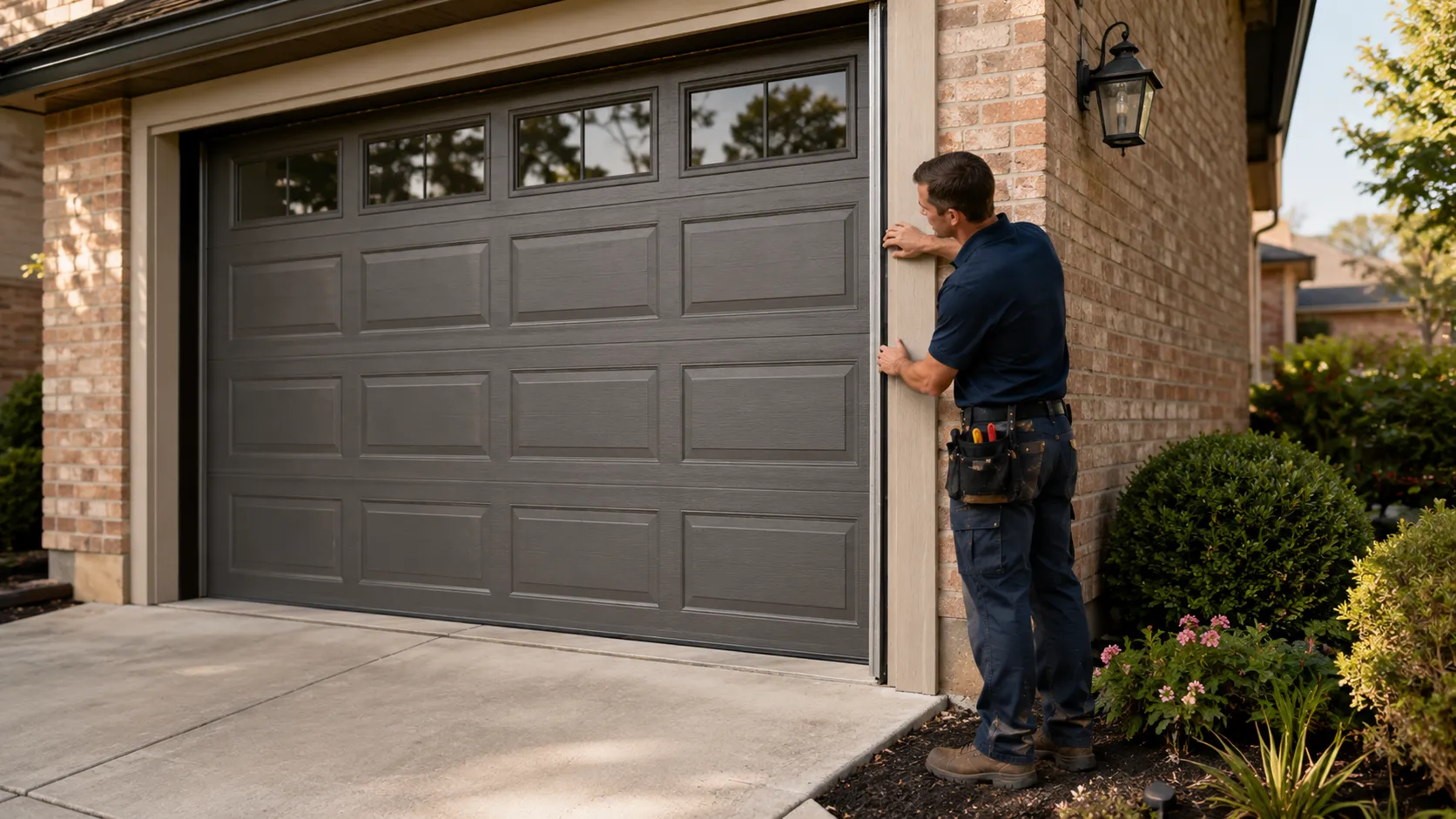
The most common mistake we see locally is treating every door the same regardless of build era. Someone in Shalimar or out toward Lake Lorraine calls because a door is "just slow," and it turns out the track was installed for a lighter panel decades back and has never been adjusted for the heavier replacement door now hanging on it. We also see owners lubricate rollers and call it maintenance while the actual wear is in the spring cable, which nobody looks at until it lets go.
Given how much of the stock here dates to the 1960s-70s wave, a lot of hardware is original or close to it, and original hardware doesn't always match the door bolted to it now. We won't pretend every fix is quick - if the track geometry is wrong for the door weight, that's a parts-order job, not a same-visit tighten. That's the honest limit: some jobs need a part we don't carry on the truck, and we'd rather tell you that up front than force a bad fix.
The Seasonal Bit
Fort Walton Beach sits in a mild climate band with occasional freeze, not the deep freeze-thaw cycling that tears up hardware farther north. That's good news for steel doors - less cracking from expansion - but it doesn't mean the climate does nothing. Salt-laden, humid air off the coast toward Ocean City and Miramar Beach direction works on exposed fasteners, spring coils, and unpainted brackets steadily, all year, rather than in one dramatic season.
We don't get the ice-jammed track calls that colder markets do. What we get instead is corrosion creeping into hinges and hardware that looks fine until a bolt shears. On the rare cold snap, older lubricant on original 1970s-era hardware can stiffen just enough to make an already-worn spring finally fail.
It's not a big seasonal swing, but it's steady wear, and it's the reason a spring that looked fine in October can go in January.
What Local Conditions Do
Put the housing age and the climate together and you get a specific failure pattern for this area. Original hardware from the 1973-2013 build wave, worn slowly by mild coastal humidity rather than snapped by freeze-thaw, tends to fail through fatigue and corrosion rather than sudden cracking. On a service call near Hurlburt Field or out toward Valparaiso, we're often looking at a spring or cable that's been quietly weakening for years, on a door installed when energy codes and panel weights were different than they are now.
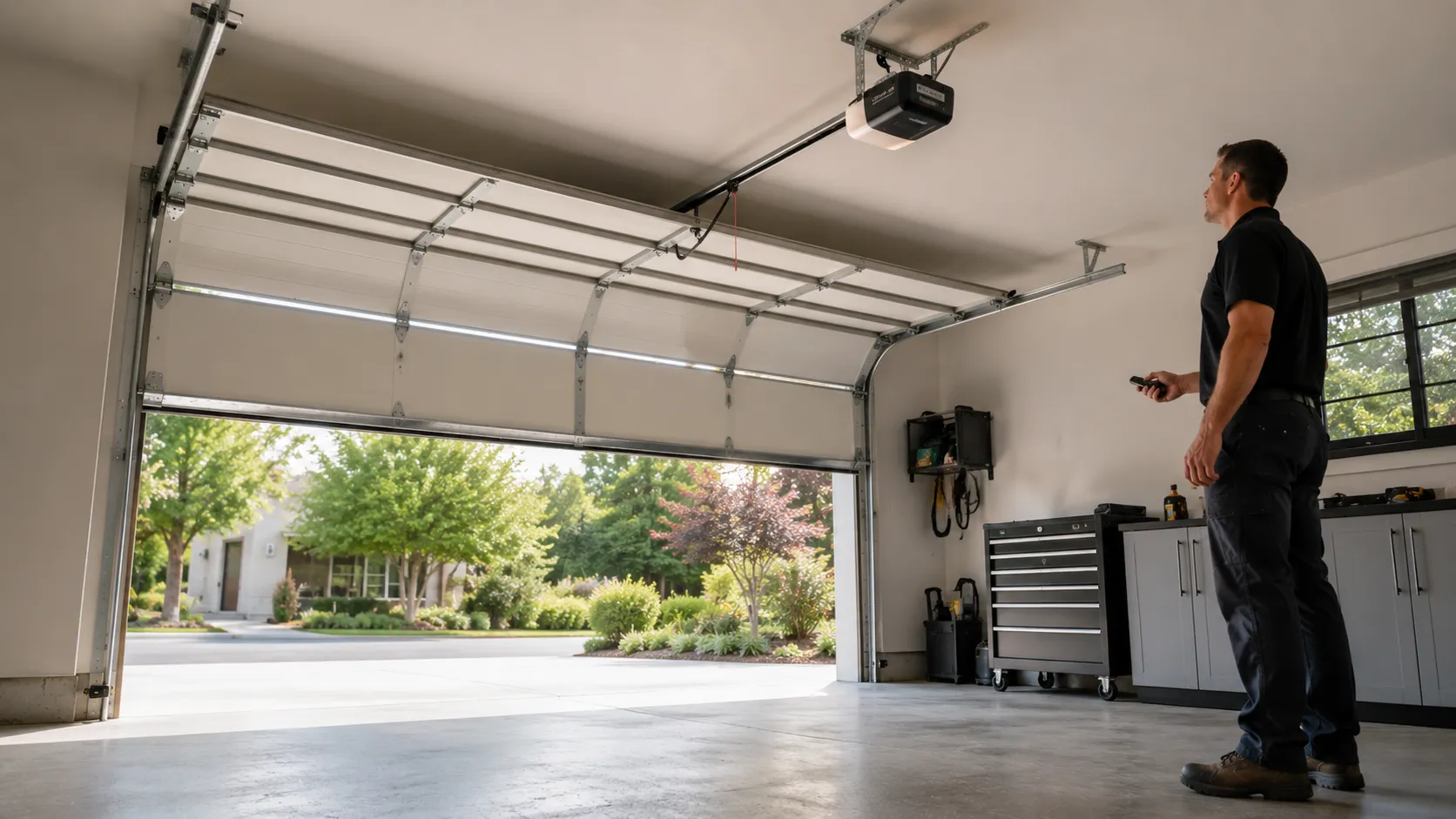
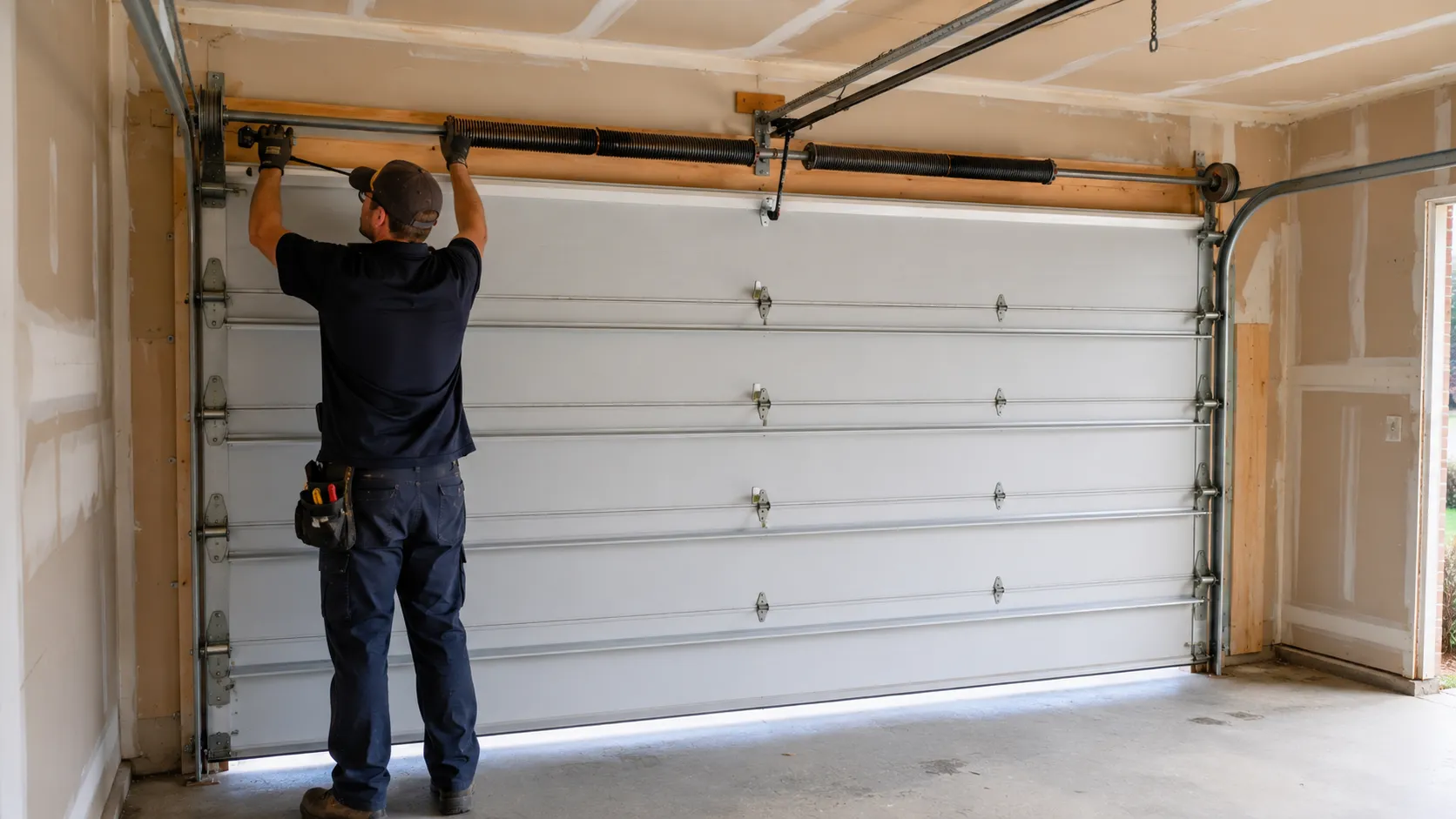
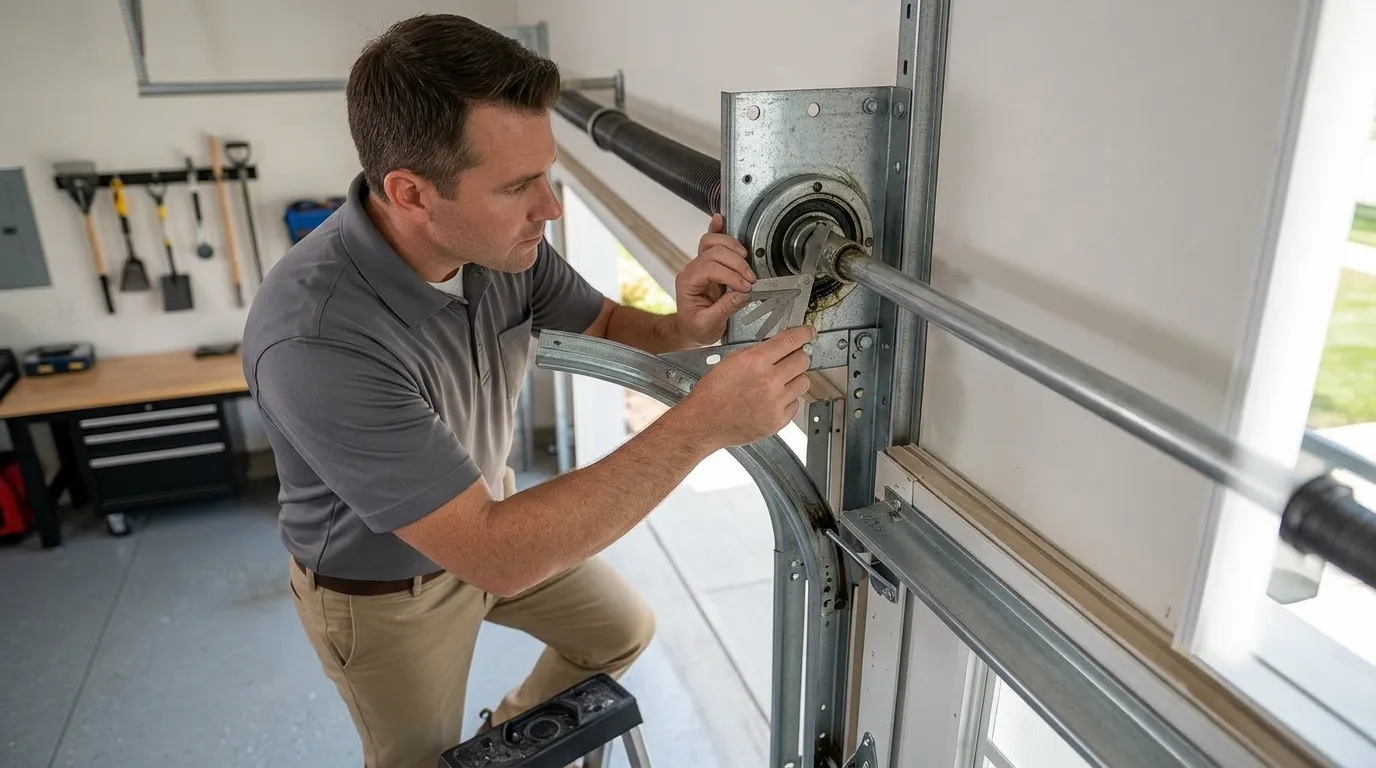
We check the spring wind and cable condition first, then the track alignment against the actual door hanging on it, then the opener's force settings, because an opener tuned for a lighter original door will over-strain a heavier replacement. It's rarely one thing. It's usually an older structure carrying a newer door, in air that never freezes hard but never lets metal fully dry out either.
How We Can Help
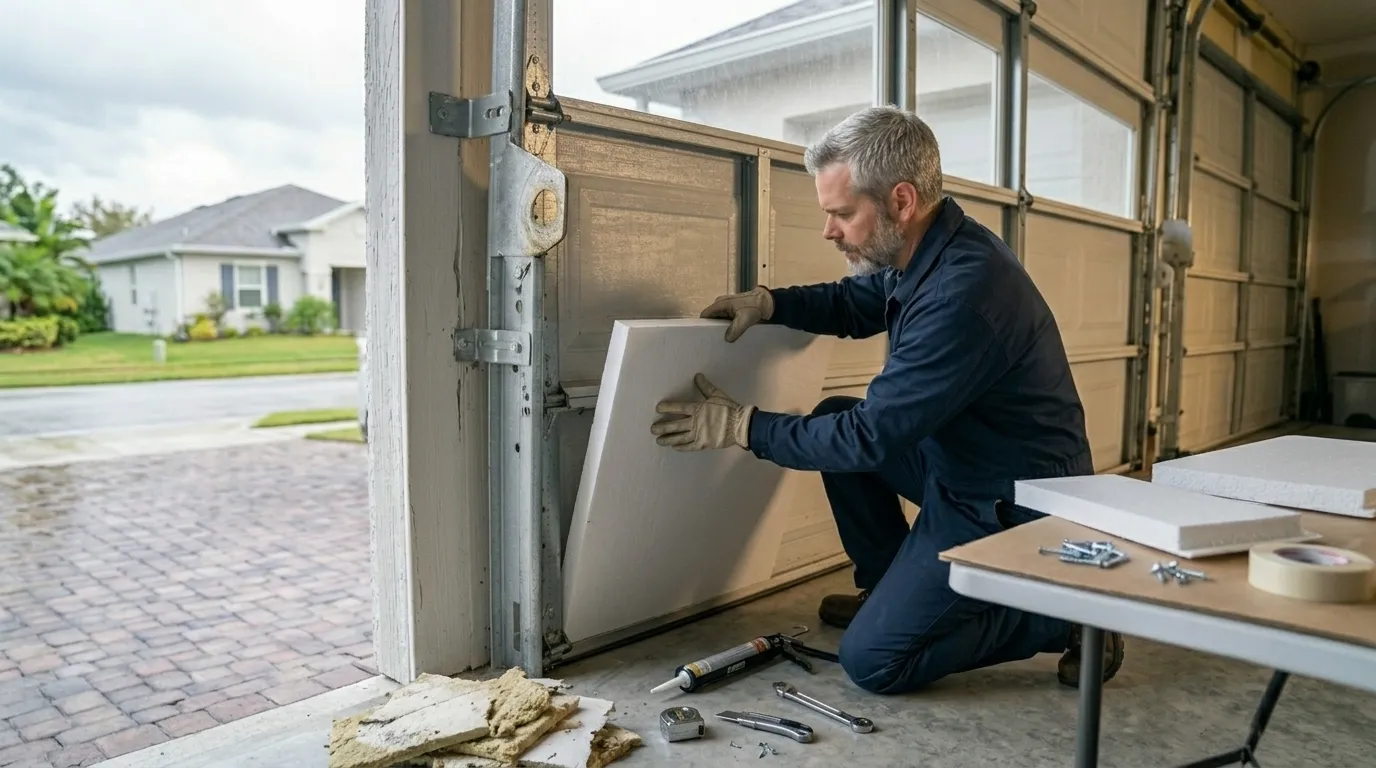
Garage Door Repair
Springs, cables, tracks, rollers, and openers fixed by a tech who explains the problem before touching anything.
Learn more →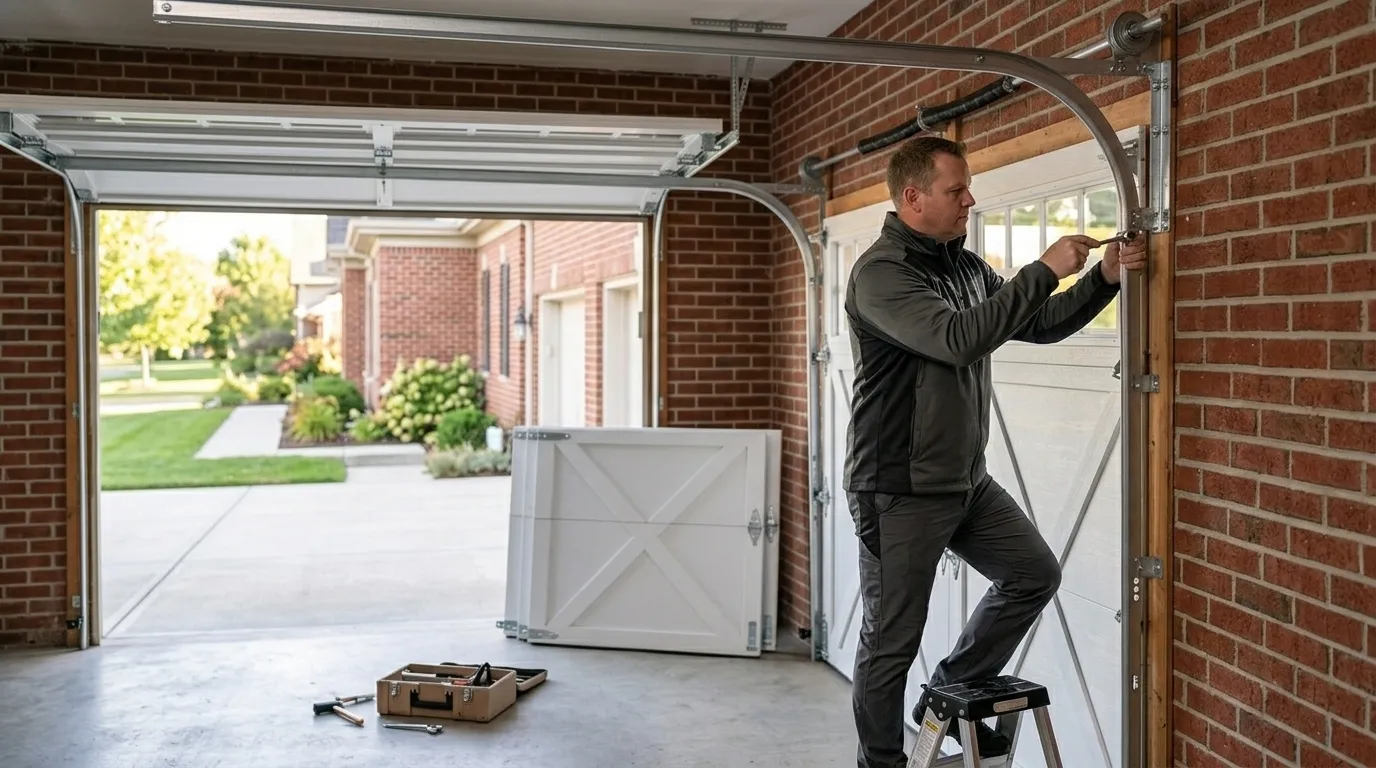
Garage Door Installation
New sectional doors sized and installed for the housing stock actually built in this area.
Learn more →
Garage Door Service
Tune-ups, lubrication, and safety checks that catch a small problem before it becomes a service call.
Learn more →Frequently Asked Questions
How old is the hardware on a typical Fort Walton Beach garage door?
A lot of it dates back to the area's main build wave, roughly 1973 to 2013 with a median around 1979. If your house is from that era and the door's never been replaced, you're likely looking at original springs, track, and rollers, which is usually the first thing we check on a call.
Does the coastal climate here cause different problems than up north?
Yes, but not the freeze-thaw cracking colder regions see. This area sits in a mild band with only occasional freeze. The bigger factor is steady humid, salt-carrying air that corrodes fasteners and hardware gradually, so failures tend to show up as fatigue rather than sudden breaks from cold.
Can you fix an older door the same day you come out?
Often, yes, if it's a common spring or roller job. But if your track or hardware was sized for a different, older panel than what's currently installed, we may need to order a part that matches the actual door, not just the opening. We'll tell you on the spot which one it is.
Do you cover areas outside Fort Walton Beach itself?
We work the surrounding pocket too, including Ocean City, Mary Esther, Shalimar, Lake Lorraine, and out toward Hurlburt Field and Valparaiso. Housing age and hardware patterns are similar across that stretch since most of it went up in the same building period.
Have a Door That Needs a Second Opinion?
Call and describe what it is doing - we will tell you what it likely is.